Resource guarding
What is resource guarding?
Resource guarding is a natural canine behaviour that occurs when a dog wants to keep hold of something valuable to them.
It may happen every now and again when your dog has a particularly tasty chew or an especially fun toy, but it can develop into a larger problem if the behaviour happens more frequently.
Signs of resource guarding include:
- Standing over a toy or food
- Freezing
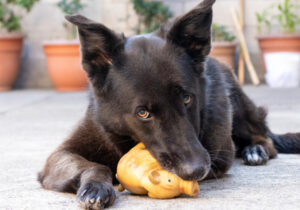
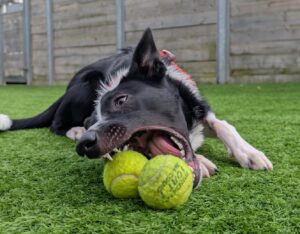
- Lying down and chewing with paws around the toy or treat, almost in a ‘grabbing’ motion
- Displaying body language signals indicating stress:
- tense mouth muscles
- whale eyes
- lip curls
- hackles raised
- growling
- Picking up the item and moving away whenever someone gets too close
- Eating treats or food more quickly when people are around.
When does resource guarding become a problem?
Every dog will display an element of this resource guarding behaviour at some point in their life. However, it can become a larger problem if a dog begins guarding and displaying signs of stress and aggression at every meal time or if the guarding behaviour extends to wider objects like doorways, sofas, people, or whole rooms.
Resource guarding behaviour can also become a bigger issue if there are young children in the household as they’re generally less aware of their surroundings or dog body language, which can cause things to escalate.
Why does resource guarding develop?
There are a number of reasons why a dog might suddenly start resource guarding. If your dog displays a sudden change in behaviour, it’s a good idea to consult a vet as there may be a more serious underlying cause.
Some reasons why resource guarding may develop include:
- A change in their environment, eg. moving house, a new baby in the home, noisy building work nearby
- Pain
- Stress
- If they have displayed early indications of stress such as raised hackles, whale eyes and lip licking that have been repeatedly ignored, the behaviour may escalate to a more serious issue.
How to tell if your dog is uncomfortable
Signs that your dog is stressed or uncomfortable include:
-
Ears pinned back
-
Tail slightly tucked
-
Lots of panting
-
Wide eyes
-
Hackles raised and stiff body
-
Salivating
-
Growling
If you notice your dog displaying signs of discomfort and resource guarding, give them some space and don’t immediately attempt to remove the object from them. This may cause undue stress and worsen the behaviour in the future.
Instead, here are some tools you can try to diffuse the situation.
How to prevent resource guarding from developing?
How you help a dog manage their resource guarding tendencies will vary slightly depending on what it is they have the issue with. At the core, however, the best approach is to give them a protected safe space to enjoy their treats, toy, or whatever it is in peace.
For example, if an issue is starting to develop at dinner time, try giving their food and stepping away until they’re finished eating. Offer their food in a quiet corner of the room where there won’t be lots of foot traffic passing by as they eat. Don’t allow children or visitors to approach your dog while they’re eating, you could even use a baby gate to create a protected, quiet space for them to enjoy their meal.
If they start displaying guarding tendencies when given a high value treat or toy, take a similar approach and give it to them in a quiet environment like the garden or in a separate room where they won’t be disturbed.
If they start guarding other things like doorways, sofas, or beds and the behaviour is becoming a bigger issue in your household, we recommend seeking professional support.
Step-by-step training tips to manage resource guarding
There are a couple of fun engagement games you can try with your dog to turn their attention away from resource guarding tendencies.
Treat and retreat
This is one we use a lot with dogs who display resource guarding behaviours at Edinburgh Dog and Cat Home. It’s an easy game that you can do any time.
-
1
Create a positive association with you approaching them
Drop a small treat by your dog any time you walk by them and immediately move on. If they’re nervous about you getting close to them at all, toss the treats from a safe distance. Watch carefully for signs of discomfort and don’t crowd them if they appear stressed. You can do this anytime, whether they’re already playing with another toy or not.
-
2
Keep building the positive vibes
Continue to drop small treats beside them while they’re playing with both high value and less high value toys and treats. You could also try putting half of their breakfast in their food bowl then walking up occasionally to drop in a few more biscuits.
-
3
Keep it calm and relaxed
Only practice this game when there’s a calm environment and there are no children running around. You want your dog to be in the right frame of mind to take things in and be able to learn, this isn’t possible when they’re feeling too hyped up!
Trade
Teaching your dog a cue to drop or ‘leave’ an item is a great way to tackle resource guarding, but it’s important to trade or swap this item for one of equal or higher value. The point is to teach your dog that giving something up leads to getting something just as good in return.
Don’t take something off a guarding dog but if they have something that could hurt them then find the highest value reward you can and encourage them to leave the object.
When to seek professional help?
If your dog’s resource guarding behaviour is becoming an issue and you’ve already consulted your vet, we strongly recommend enlisting the help of a professional dog trainer or behaviourist. It’s likely that there are deeper issues at play which a qualified behaviourist can help you uncover.
Tips to find the right help
It can be overwhelming to try and find a good quality trainer with so much information available online.
Here are some things to look out for when recruiting a dog trainer or behaviourist:
- Make sure that you find somebody who is qualified, read all their reviews and case studies. A well-trusted trainer should have plenty of information about their previous work readily available.
- Ask them about their methods and history, be wary of trainers who don’t have much information about the way they work on their website.
- Some professionals offer free consultation calls to discuss your problem and figure out if you would be a good fit. Make the most of these!
- Find out if they have any areas of expertise, does this match what you’re looking for?
- We recommend positive reinforcement methods. Aversive or punishment type methods can suppress behaviours rather than working with the dog to find out what’s going on.
- Be wary of anyone promising a ‘quick fix’ — these things take a lot of time and work.
Final resource guarding thoughts
Some dog breeds, like spaniels or shepherds, are more prone to resource guarding than others. Do your research before taking on a new dog to find out as much as you can about their breed tendencies. Certain high drive breeds benefit from specific training and activities to keep them stimulated and happy.
Look at your dog’s general needs, are they getting enough sleep, an appropriate diet, and plenty of exercise and attention? If these needs are not being properly met, unwanted behaviours like resource guarding may appear due to frustration or boredom.
Remember that resource guarding is a natural behaviour. Don’t be too worried if it happens once in a while when they get an especially exciting treat or toy. Try engagement games like ‘leave it’ to divert their attention but don’t forcibly remove the item from the dog.
More advice