
Rehoming FAQs
How we assess our pets...
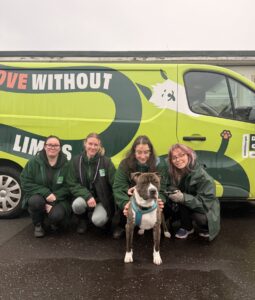
Our Animal Welfare Team evaluates each animal that arrives in our care, checking for fleas, ticks or more serious medical issues which will need to be treated by a vet. They’re settled in their kennel or cat pen with fresh water, a cosy bed and plenty of regular good food. We give them time and space to decompress at first, and lots of love and cuddles when they’re ready to accept it.
We assess every animal over their first week with us to get to know their personalities and needs. This assessment, as well as any information we’ve learned from their previous owners, will determine if a dog needs to go on a training plan to help them manage issues such as reactivity, guarding or building confidence.
Our Animal Welfare Team take time to really get to know each of our animals and understand what they need from their new home. It’s vital that we make the best match we can to reduce the risk of a dog or cat being returned, causing them undue stress.
Help us make an informed decision by providing plenty of information on your application form – we would love to help you find your new best friend!
There are a number of reasons why a dog specifically requires a private garden rather than access to shared green spaces.
Some of the dogs we care for are overwhelmed by strange sights and sounds when going on walks, so they need a safe outdoor space where they can exercise without stress. We would encourage owners to continue working on their training to help them manage their fears as well.
Dogs who are reactive to people and other dogs need a safe space like a private garden for them to exercise and play without the risk of potentially dangerous interactions.
Not every dog requires direct access to a private garden, and when we specify this on a dog’s profile, it’s for a good reason!
Dogs who are very reactive to other dogs or people will find it incredibly stressful to suddenly encounter someone in a stairwell or shared space. Offering direct access to a private garden or their home ensures a stress-free and reduction in risk for every entry and exit.
We specify an adult only home if an animal has displayed certain behaviours or if their previous owner has shared information that would deem them too risky to place in a home with other pets or kids.
Otherwise, we might have previously tried to place them in a home where there were other pets or children, and the match didn’t work out causing them to be returned to our care.
We don’t always know an animal’s background, but a lack of socialisation or traumatic experiences may have left them fearful of children and other animals. Even if the child is good with animals, it wouldn’t be fair to the animal to place them in a home where they will be continually stressed and uncomfortable.
In all of our matches, we prioritise the animal’s well-being to ensure a happy result for everyone and minimise the risk of them being returned to our care.
Some of the dogs and cats who arrive in our care have experienced difficult situations in their past, or they may simply have never had a stable home before. As a result, they may have developed some challenging behaviours that would be too much for a first-time owner to handle.
We have found that rehoming these animals to owners who have previous experience of challenging pets improves the chance of a successful match.
Some of our animals are full of energy and need a lot more exercise than a simple walk around the block or run in the park. These dogs are better suited to an active home where they will get all the stimulation they need.
If an active dog doesn’t get enough exercise, they can start to display unwanted behaviours due to boredom, and this increases the risk of them being returned to us.
Some of our animals find busy areas too overwhelming and they get stressed by the noises of people, other dogs or traffic.
Placing them in a city centre environment would be stressful for them and they’re more likely to struggle settling even within the home. It also poses a safety risk if they get frightened and slip out of their harness to run, which isn’t nice for the animal or owner.
Some breeds such as collies, shepherds, terriers and bull breeds have quirks and characteristics typical to their breed. This is case dependent as not every animal will need to go to a home with breed experience.
In some cases however, placing them with someone who has owned this breed before increases the chance of a successful rehoming.
We go through every application with the animal’s needs in mind. We want to make sure we give both the animal and the applicant the best chance of a successful rehoming, so the more information you can give us, the better!
We’re looking for an insight into what kind of home you could offer the animal so it’s helpful to include information such as:
- Details about previous pets
- Details about previous experience of pets with challenging behaviour or medical issues
- Details of how you managed these issues, such as working with trainers or giving daily medications
- Information about if there are children who regularly visit their home, and how often this might happen
- Information about other pets in the home, their personalities, and if they have lived with other pets before
Find out more details about the ins and outs of our application process here.
We no longer allow drop-in visits to meet the animals. However, if you’re successful in your application to rehome a dog or cat, we’ll invite you to come and meet that animal to get to know them before you take them home.
Since we stopped allowing site visits in 2020, our Animal Welfare Team has seen a dramatic improvement in our animals’ stress levels. Their kennel is their home, and it can be very upsetting to have strangers walking in and out of their territory.
Removing site visits has also allowed our Animal Welfare Team to structure their day fully around the animals’ needs and gives them more time to work on training plans, exercise, enrichment activities and medical care. This keeps stress levels low and gives our animals a better chance of finding a successful home.
We’ve seen great results from our online rehoming process. In the first half of 2025, we rehomed 132 animals with only 11 returns compared to the same time frame in 2019 when we rehomed 169 animals with 31 returns.
- Do you have the time to settle a new animal in?
- Just because the animal is an adult doesn’t mean they’ve had any training. Are you prepared for this commitment?
- Have you thought about the financial implications such as the cost of feeding, vet bills, and pet sitting?
- How open-minded are you? If you have your heart set on a specific breed, it can take longer to find the right animal.
- Taking on a new pet is a life altering commitment. Are you ready for that?
- We recommend that you research different breeds and common problems they can have (behavioural or medical). What sort of pet would fit into your lifestyle?
If after considering all the points you feel a pet would fit into your life, please do consider adopting a rescue pet who has lots of love to share with the right person.
Ready to apply?
Adopting a pet is a life-changing decision for both animal and owner, and our experienced staff are on hand to support and advise, every step of the way. If you think you’ve seen your perfect match, please read about the next steps on our How To Adopt page, or fill in an enquiry form to begin the process.