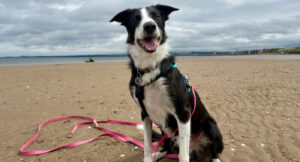
Lead work and harnesses
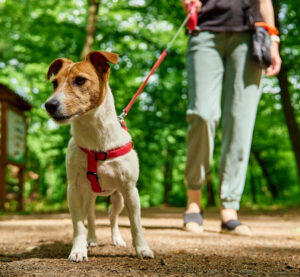
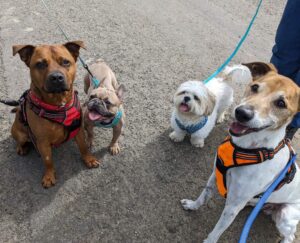
How to choose the right collar, harness, or lead for your dog
The most important thing when buying any dog harness is to find one that’s secure and fits your dog comfortably.
A harness with lead attachments at both the chest and the back allows you to choose whichever is best for your dog. Clipping the lead at the front of the harness can help prevent boisterous dogs from pulling too much as it causes them to move sideways when they tug.
Look for a harness which doesn’t restrict their shoulder and leg movements, while also supporting their chest. V-neck harnesses are better for allowing movement and not putting pressure on their airways.
A good harness should be padded and adjustable to fit your dog comfortably. Consider the shape of your dog, for example, sighthounds are very narrow and deep chested so they may require a three point harness they can’t slip out of.
When to use a harness vs a collar – which is best?
This is really down to personal preference!
A secure and comfortable harness is a great option for a more excitable pup who’s prone to pulling but if your dog is happy to walk beside you nicely then a collar is fine too.
If your dog pulls on the lead a lot, they may end up damaging their neck if they’re just wearing a collar. A harness will give you more control while walking them and help keep them comfortable and safe.
How to tell if a collar or harness fits properly
You should be able to fit a finger between the straps and your dog’s body but it shouldn’t be slack enough that they could slip out of it.
Observe your dog’s body language while they’re wearing the harness. Are they showing signs of stress and discomfort or do they seem comfortable and relaxed?
How to tell if a collar or harness is safe for use?
When buying a harness, it’s worth doing a little research to read other people’s reviews. Check that the harness is made from tough, durable materials and avoid mesh harnesses as the fabric can easily stretch and become unsafe.
Check that the clips are secure and not likely to break or release if your dog pulls too much.
Watch your dog moving in their harness, if their movement seems restricted in any way by the harness then it’s not safe for use.
Step-by-step training tips for walking nicely on the lead
The 1,2,3 pattern game
Leslie McDevitt’s 1,2,3 pattern game is a good tool to work on lead-pulling. It’s very simple to set up, simply stand with your dog on the lead beside you and remember that the word ‘three’ means treat!
-
1
Say ‘three’, give a treat
Have a treat in your hand, say ‘three’ and offer the treat to your dog. Repeat this until your dog has recognised that ‘three’ means treat.
-
2
Count one, two, three
Repeat this, but start to slowly count ‘one’, ‘two’, then ‘three’ and offer the treat on ‘three’.
-
3
Add movement
Once your dog has got the hang of waiting for their treat on ‘three’, you can add movement by slowly taking steps forwards as you count. Keep the treat in a closed hand and keep your dog beside you in a ‘heel’ position as you go. Continue to offer the treat on ‘three’.
-
4
Add distractions
Once your dog is consistently walking beside you and staying close for the treat on ‘three’, you can start to add in more distractions or practice in busier locations. Over time, you can slowly stop counting out loud but continue offering a treat when your dog walks closely at heel. Eventually, they shouldn’t need treats to walk well, but remember to reward them for good work!
What not to do when walking your dog on the lead
When walking your dog on the lead, don’t ever try to control them by yanking the lead to make them stop.
This will frighten your dog, creating negative associations with the lead and make future walks more difficult.
Try to be patient with your dog and understand that they need to feel safe and secure in order to be able to learn anything.
Common mistakes and myths with lead training
Some common lead training mistakes we see include:
- Saying ‘heel’ to the dog without ever actually teaching them what it means.
- Believing that a harness will stop your dog from pulling, you still need to put the work in to train them!
- Starting loose lead training somewhere that your dog knows to be a fun environment, like the beach or the park. There are just too many distractions!
- Having no focus or engagement between the owner and the dog.
Final thoughts on lead training
Pulling on the lead can be a really frustrating behaviour, but it can improve with training, time and patience.
It’s also worth noting that there may be other reasons that a dog pulls on the lead so it’s important to look at the bigger picture. It may be that they need more physical and mental enrichment than they’re currently getting, and by improving in other areas the lead work will naturally follow.
More advice