Introducing your dog to new pets
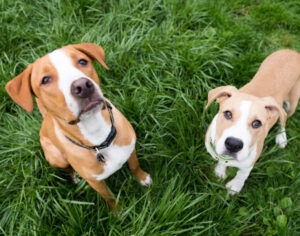

How to tell if your dog would be ok with a new dog in the family?
First of all, it’s important to consider if your dog would be receptive to a new member of the family. Your first priority is to the pet you already have so you need to make sure they’re on board with the new arrival.
To figure out if it would be ok for them, ask yourself a few questions:
- Have they had another dog in their home before? How did they react?
- How do they interact with other dogs when out and about?
- Do they look for a play friend? If so, is the play appropriate – can they take a break and do they share toys?
- What is their body language like when a dog approaches you?
If you feel confident that your dog would be open to sharing their home with a brother or sister, you can start to look for a good companion.
Rescuing a dog is a great way to bring another dog into your home as the rescue centre know which dogs would do well in a multi-pet household, and can help advise on introductions.
How to prepare for introductions
Before you introduce your dog to their new sibling, we recommend scent swapping by giving each dog a blanket or t-shirt that smells like the other.
They can get comfortable with each other’s scent so that when they do meet, there is already a little familiarity established.
Tips for a successful first meeting
To have the best chances of a successful introduction that leaves both dogs feeling happy and comfortable, our dog trainer suggests that you:
-
1
Meet in a neutral space
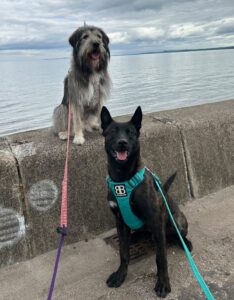
Somewhere outside of the home or the rescue centre in a spot where neither dog will feel territorial. We often take dogs down to the beach for a fun, neutral introduction!
-
2
Keep the dogs on a short lead
Until you have a good sense of how the dogs will interact with each other, it’s better to maintain a more controlled environment by keeping them on short leads.
-
3
Remove any toys
Avoid the possibility of resource guarding by removing any toys that could cause trouble before you bring the dogs in.
-
4
Try a parallel walk
Walk both dogs beside each other on short leads, maintaining a comfortable distance. Keep a close eye on their body language and if there are no signs of stress, you can gradually decrease the distance between them.
-
5
Let them get a little sniff
If all is going well and they’re comfortable with the distance between them, you can let them have a little sniff of each other. Keep this short though, and call them to you for praise after a couple of seconds.
Bringing your new pet home for the first time
It’s the big day! Bringing your new dog home for the first time is so exciting but it pays to be prepared and think about the logistics.
Will you be taking your current dog with you to pick up their sibling? If so, how can you arrange them in the car to give both dogs maximum space?
If they’re not coming with you, consider how you can slowly introduce them at home so that the new pup doesn’t come barreling into your dog’s space and overwhelming them.
One way to do this is to immediately walk the dogs together when you get home if they’re comfortable, so that they enter the home together.
When you do go into the home, keep things calm, your new dog needs space to get familiar with their surroundings.
If there are toys or dog beds around, make sure there’s one for each of them to avoid conflicts over desired items.
The first few days together
For the first couple of days, keep a close eye on how the dogs interact with each other and also with human family members.
We recommend that you feed them separately for the first couple of days at least. You may want to consider installing a baby gate to keep them separate while unsupervised.
Maintaining a consistent routine will help your new dog adjust to life in your home, and help both dogs feel comfortable with each other.
They may be two very playful dogs who don’t know when to stop. While it’s wonderful that they’re getting on so well, you will need to intervene before they get too riled up and baby gates or crates could come in really handy to keep things calm.
Let them play for a few minutes at a time then encourage them to take a break. They can keep playing like this with breaks if both dogs are up for it. But if one becomes tired or disinterested but the other wants to keep playing, they should be separated for a proper break.
What not to do when introducing your dog to a new pet
When introducing new dogs, there are a few no-go’s:
-
Don’t ignore the dogs
Keep a close eye on their interactions to make sure they’re not displaying any subtle indications of stress that could escalate if ignored.
-
Don’t force them to be friends
Slow introductions and short play times with plenty of space will help them feel more comfortable in each other’s presence and is more likely to lead to a happy relationship!
-
Don’t feed them right by each other
Keep them separate when giving food and high value treats like bones or chew toys to prevent resource guarding behaviours from developing. You may also want to put an extra water bowl down so that they don’t have to share any resources at all.
When to seek professional support
If the dogs are uncomfortable in each other’s company and things are not improving at all, you may want to seek the support of a professional behaviourist.
If the dogs have had a fight, if they’ve stopped eating, or if your existing dog is displaying significant behaviour changes since the arrival of their new sibling, then it might be a good idea to talk to a professional.
We recommend that if you’re struggling with your new dog, contact the rescue centre or breeder in the first instance. If you have sought professional advice, and feel you have exhausted all other options, rehoming them may be the sensible choice. This is not a decision that should be made lightly as it can be extremely destabilising for the dog. You should speak to the rescue centre or breeder for support.
Final thoughts
Before bringing home a new dog, it’s so important to really consider if your current dog will be suited to having a brother or sister. Not all dogs want to share their home with another dog, and not all dogs are compatible.
Your first duty is to your current dog so we recommend taking your time to observe them interacting with other dogs and making careful introductions to the new dog if you do decide to grow your family.
It’s easy to think about what we want and let our human thoughts come before what your dog really wants.
More advice