
Crate training
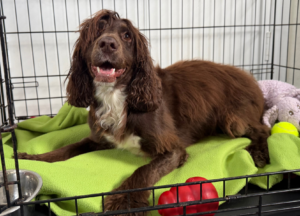

Why is crate training important?
The main benefit is safety and peace of mind – for you and your pup. A dog who feels relaxed in their crate has a convenient, portable safe space wherever they go.
Crate training is a brilliant tool for most dogs, but it is not absolutely essential. If a dog has too many bad associations with a crate and you can give them a safe space another way, you might decide it is not needed.
A crate can be a safe haven when...
A few everyday situations where a comfortable crate really helps.
-
Home alone
A familiar den while you are out.
-
Travelling by car
A secure, settled space on the move.
-
Recovering
Rest and calm after surgery.
-
Overnight
A cosy place to sleep and settle.
Is crate training only for puppies?
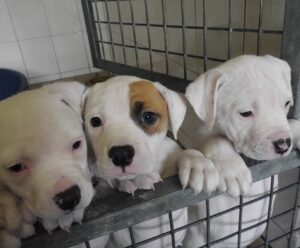
Crate training is hugely helpful for a new puppy, but dogs of any age benefit from a space of their own to retreat to. Being comfortable with a crate helps throughout life – family holidays, trips to the vet, or recovering from surgery.
It is usually easier for a puppy with no previous crate associations. Some rescue dogs may be frightened of a crate and will need extra patience and encouragement.
Choosing the right size of crate
The right size matters for your dog’s comfort. They should be able to stand up without their back touching the top and turn around fully, with room for their water and food bowls – it will probably be bigger than you expect.
Crates come as standard metal ones (with a removable tray) or soft fabric-and-mesh ones. If your dog is a chewer, choose carefully: metal bars can hurt teeth, and a determined dog can chew through a soft crate and injure themselves. When you are starting out, our dog trainers recommend a traditional metal crate.
How long can you leave a dog in a crate?
There is no hard-and-fast rule, but as a general principle dogs should not be left alone for long stretches – crate or no crate. If you do need to leave your dog home alone in their crate, only do it once they are fully comfortable and you have slowly built up the time.
Give them a good walk beforehand, leave fresh water in a non-spill bowl, and add some enrichment.
Trainer’s tip
Freeze a couple of Kong toys stuffed with your dog’s favourite spreadable treats - it gives them an activity that lasts a good while. Avoid solid treats that can work loose and become a choking hazard.
Vicky EDCH dog trainer
Introducing your dog to a crate: step by step
Take it at your dog’s pace - this is the sequence our trainers use.
-
1
Set the crate up
Place it in a quiet corner away from foot traffic, not too exposed. Drape a blanket over the top and pop their bed or blankets inside. Leave the door open so they can investigate this strange new object in their own time.
-
2
Create positive associations
Let your dog approach in their own time – don’t lure them in. Keep the door fixed open so they can come and go freely, and drop treats near and inside the crate for them to discover.
-
3
Offer enrichment
As they grow more confident and start stepping inside, keep the good associations going with treats and enrichment while they’re in there. The door stays open so they can leave whenever they like.
-
4
Slowly build up confidence
Once they settle inside for longer, begin closing the door in small increments – a minute, then two, then three – while you’re there. Watch for any discomfort, then use the same slow build-up to leave the room.
-
5
Use a camera for peace of mind
Point a camera at the crate and watch from another room, then gradually increase the distance and time. Start with a minute and build up until you can head out knowing they’re relaxed in their own little den.
-
6
Don’t stress about setbacks
If you move too fast, don’t panic – you don’t need to start from scratch. Go back to the last step they were happy with and build up again. Patience is everything, especially with a rescue dog.
When should you move on to the next step?
Watch your dog’s body language. When they’re relaxed and loose – lying down in the crate or chewing a favourite toy – it’s probably time to progress. Don’t rush the moment you see those signs, though: let them show relaxed behaviour for a while first. You know your dog best.
How to tell if your dog is uncomfortable
If you spot these at any stage, take a step back and give your dog space to go at their own pace.
-
Ears pinned back
Held flat against the head.
-
Tail tucked
Held low or under the body.
-
Heavy panting
Panting when not hot or tired.
-
Wide eyes
Showing more white than usual.
-
Salivating
Drooling from stress, not food.
-
Crouching or shaking
Making themselves small, trembling.
-
Hesitancy
Slow, cautious moves around the crate.
Common mistakes to avoid
A few things that set crate training back - and what to do instead.
Do
- Progress at your dog’s pace
- Make the crate cosy and inviting
- Size it so they can stand and turn
- Tuck it into a quiet corner, part-covered
- Keep it a positive, safe space
Don’t
- Rush through the stages
- Close the door the moment they step in
- Buy a crate that’s too small
- Leave it exposed in a busy area
- Use it as punishment or a “time out”
Final crate training advice
Above all, be patient. This is a lot to ask of a puppy – or an adult dog who may have had some really tough experiences – so building trust and confidence matters far more than rushing to full crate use.
Every dog is different, and your new dog may feel differently about training than any you’ve known before. And remember: while almost any dog can be crate trained, if the whole process is proving far too stressful and you can give them a safe space another way, it’s worth thinking about how necessary it really is.
More advice

Need a hand with crate training?
Our trainers are here to help. Book a 1:1 session, or explore more of our training advice.
Book a 1:1 session