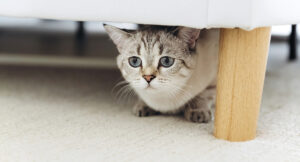
Helping your cat manage environment changes


What kind of environment changes could stress your cat out?
Cats are very easily affected by their environments and all sorts of things can stress them out. For example:
- A new piece of furniture in the home, or even just moving a piece of furniture
- A new baby in the home
- A new pet in the home
- Moving house
- Moving their food and water bowls
- Feeding them at a different time or any other changes to routine
- Guests coming to visit
Cats are highly sensitive creatures and it’s important to be aware that even the smallest changes could upset them.
Tips for helping a cat cope with a change in their environment
Of course, change is unavoidable and your cat will have to learn to cope with it from time to time.
As much as you can, protect their space and their routines, but when this isn’t possible, here are some tips to help manage their stress.
Create a safe space
Ensure your cat always has access to a safe, hiding spot where they won’t be disturbed. This could be a room in the house with their favourite things where they can sneak off to when guests come, or things get a little too much for them. Or even just a little hidey hole made from a cardboard box and some blankets.
Wherever your cat likes to relax, respect their boundaries and don’t remove them from this space unless it’s an emergency.
Read our articles on moving house or helping your cat decompress for more specific advice.
Maintaining routines
Whether you’re going through a big change, like a renovation or a new baby, or something smaller like a new piece of furniture, do your best to keep your cat’s routines consistent.
Feed them at the same time, in the same place every day, and stick as much as you can to your existing schedule of playtime and relaxing time with them.
Of course, this isn’t always possible. If you have new working routines that make it hard for you to stick to your cat’s usual schedule, a timed automatic food bowl can help!
Pheromone sprays and scent swapping
Pheromone sprays like Feliway can really help anxious cats. Leave a plugin in their favourite safe space, or lightly spray their belongings according to package instructions.
Some cats find it relaxing to snuggle into something that smells like you, place one of your t-shirts in their bed or hiding spot to offer them some familiar comforting smells.
In the cattery, we also find that leaving some soft, classical music playing can be soothing for nervous kitties.
Introducing changes gradually
When a change to your cat’s environment does have to happen, try to introduce it as gradually as you can.
For example, if you’re packing up to move house, keep your pet’s belongings in their usual place for as long as you can. Or if you know that a new job is going to cause a change to their usual playtime, start to slowly move the time you spend with them over a few weeks.
When should you seek professional support?
Your cat has five welfare needs which it is your duty to provide:
Your cat’s five welfare needs
-
Environment
You provide your cat with an appropriate environment. Their water, litter and food bowls should be kept separately and cleaned regularly. We recommend one litter tray per cat plus one. Cats also need access to beds, hiding spots, and scratch posts.
-
Diet
You must feed your cat a healthy balanced diet which is appropriate for their age and nutritional needs.
-
Behaviour
Your cat needs to be able to express their natural behaviours like hunting, hiding, scratching, and sleeping. This means plenty of enrichment activities and toys, comfy beds and scratching posts.
-
Companionship
Cats often prefer to be the only pet and don’t require to live with other cats for their wellbeing. This means that if you do have more than one cat, it’s important that each of them have free and easy access to their own resources and individual safe spaces.
-
Health
It’s your job as a pet owner to care for their health and protect them from pain and suffering. This means having them registered with a local vet, keeping up-to-date with check ups and taking them for an examination at the first sign of illness or concern.
If you’re meeting all your cat’s welfare needs and they’re still displaying signs of stress or discomfort, you should seek professional advice.
Behaviour changes can be an early indication of illness, so speak to your vet first before seeking the advice of a behaviourist once any health problems have been ruled out.
More advice
Litter trays